About the author
About me
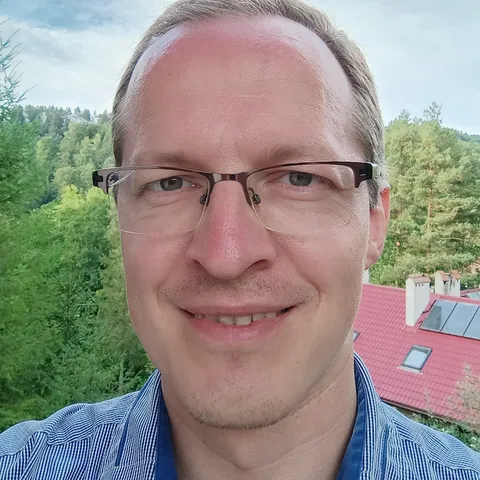
By education, I'm a mathematician and computer scientist. By profession — a programmer who takes on work in niche technologies (HP NonStop, Haskell). By vocation — an inventor and designer.
I've never been satisfied with "that's just how it's done," or with moving past things simply because they're "obvious." I never went looking for a way to name this — I just took it to be the most natural, scientific way to approach things. It was only running into the fact that things could be approached entirely differently that provoked the realization: when I came across Feyerabend's epistemological anarchism, I felt a bit like the character who discovers he's been speaking prose his whole life.
Close to this is the way I see the world through games — as models that carve out a fragment of reality and let you examine it. That's why games are, for me, not just entertainment but a tool for thinking.
For the same reason, I value amateurism — in the sense where an amateur is someone who loves what they do. When a sport, a game, or a puzzle turns into something you have to train professionally for, its original character gets distorted. (The old film "Chariots of Fire" captures this well.)

I still carry a good deal of childlike curiosity about the world, and a wish to play — and I have no trouble admitting that. Just as I have no trouble admitting when I don't know, don't understand, or can't do something. At the same time, I take life seriously: it matters to me that what I do stays consistent with what I believe, and that I take responsibility for it.
Some people would call me stubborn. I prefer the word determined. I don't give up in the face of setbacks; I always look for what can be done in a given situation. I keep pushing promising projects forward, however slowly they move. In this, I feel a kinship with Okabe Rintaro from Steins;Gate — a mad scientist at heart, but relentlessly consistent.
When I'm inwardly convinced of something, outside pressure doesn't move me much — even if standing my ground meets with incomprehension or disapproval. By the same token, though, I believe that in matters someone else is responsible for — their own life, raising their own child, the work of their own team — it's their judgment that settles it, not whatever might be argued to be objectively best.
Being a husband and father is my greatest calling. My wife, Agnieszka, has found her life's purpose in working on behalf of parents of children diagnosed with autism — she runs autyzmpoludzku.pl, combining education, her own experience, and scientific work. I support her in this wholeheartedly, including in practical terms — on the technical and organizational side.